



Credit: ©️ Allard Schager/Getty Images; Illustration by Issiah Davis/Bankrate
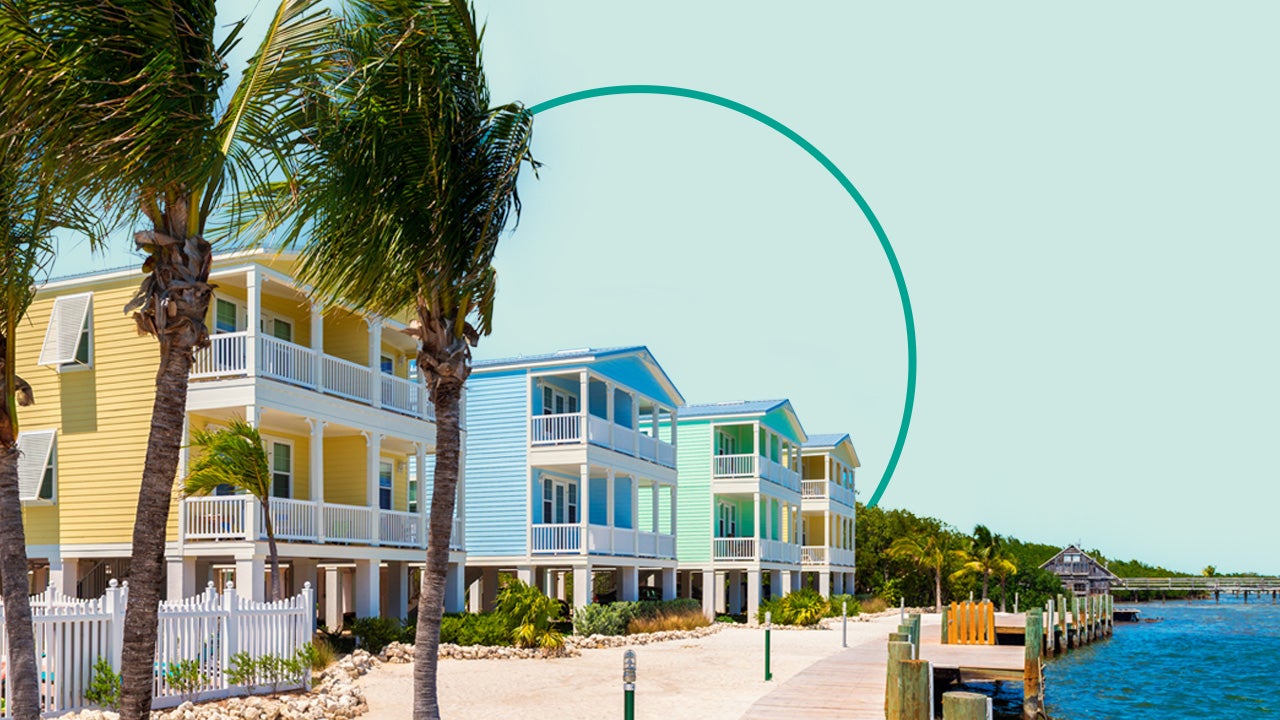
Shopping for a home in Florida often means navigating a market of extremes, from modest homes in rural areas to multimillion-dollar mansions and high-rises in Miami. Overall, it’s a mixed picture for the housing market in the Sunshine State, with shifting conditions depending on where you’re looking, the property you want and other local factors.
Median home prices and the number of homes selling above list price in Florida are up year over year, signalling strong demand, according to Redfin. On the opposite side of the spectrum, the number of homes for sale, overall supply and newly listed homes are down year-over-year.
If you’re planning to buy a home in Florida, comparing mortgage lenders is an important first step. Here are some of the best lenders in the state that have earned high marks from Bankrate and positive feedback from borrowers:
Best mortgage lenders in Florida
| Lender | Credit requirements | Down payment minimum | Bankrate Score |
|---|---|---|---|
| FourLeaf Federal Credit Union | 620 for conventional loans, 500 for FHA loans | 3% for conventional loans, 3.5% for FHA loans | 4.9 |
| Chase | 620 for conventional loans, 680 for jumbo loans, 640 for FHA loans, 640 for VA loans | 3% for conventional loans, 3.5% for FHA loans, none for VA loans | 4.9 |
| Tomo Mortgage | 580 for conventional loans | 3% for conventional loans, 3.5% for FHA loans, none for VA loans | 4.9 |
| Veterans United Home Loans | 620 for conventional loans and VA loans | 3% for conventional loans, 3.5% for FHA loans, none for VA loans and USDA loans | 4.8 |
-
- Availability: All U.S. states except Texas
- Loans offered: Conventional, jumbo, FHA, VA
- Credit requirements: 620 for conventional loans, 500 for FHA loans
- Down payment minimum: 3% for conventional loans, 3.5% for FHA loans
- Where to find: Branch locations and online
-

Pros
- Displays daily rates online
- Rates tend to be lower than the national average
- Offers a 10-year fixed-rate mortgage

Cons
- Must be a member to get a mortgage
- Doesn’t offer USDA loans, construction or renovation loans
- Branches are primarily located only in New York City, Long Island, NY and New Jersey
-
FourLeaf Federal Credit Union, formerly Bethpage Federal Credit Union, boasts rate transparency, competitive rates and a variety of loans across most of the country. The credit union makes the mortgage process convenient by allowing applicants to apply online or in person. FourLeaf also offers multiple customer service contact methods and an online portal to track your application status. To get a mortgage, though, you’ll need to become a credit union member.

-
- Availability: All U.S. states
- Loans offered: Conventional, jumbo, FHA, VA
- Credit requirements: 620 for conventional loans, 680 for jumbo loans, 640 for FHA loans, 640 for VA loans
- Down payment minimum: 3% for conventional loans, 3.5% for FHA loans, none for VA loans
- Where to find: Branch locations and online
-
Pros
- Available to borrowers in all states, with more than 5,000 branch locations
- Existing Chase customers might receive rate discount
- $5,000 closing guarantee
Cons
- Bank might not be a fit for borrowers with unique credit or financial circumstances
- Branches not located in all states
- Before getting a mortgage, Chase recommends that you speak to a home lending advisor
-
Chase stands out for its low-down-payment loan options and grant programs, making homeownership accessible to many buyers. The lender also boasts of a broad footprint and product portfolio, a transparent online presence and vast digital resources. One drawback is that the bank requires you to speak with a loan officer before getting a mortgage, which slightly lowered its score.
-
- Availability: Alabama, Alaska, Arizona, Arkansas, California, Colorado, Connecticut, District of Columbia, Florida, Georgia, Idaho, Illinois, Indiana, Iowa, Kansas, Kentucky, Louisiana, Maryland, Michigan, Minnesota, Nebraska, New Jersey, North Carolina, Ohio, Oklahoma, Oregon, Pennsylvania, South Carolina, Tennessee, Texas, Utah, Virginia, Washington, Wisconsin, and Wyoming
- Loans offered: Conventional, jumbo, FHA, VA
- Credit requirements: 580 for conventional loans
- Down payment minimum: 3% for conventional loans, 3.5% for FHA loans, none for VA loans
- Where to find: Online
-
Pros
- No origination or processing fees
- Displays mortgage rates online
- Offers a rate lock, float down rate drop protection and a price-match guarantee
- Allows e-closings and remote notarization
Cons
- Doesn’t have national reach (only available in 34 states and Washington, D.C.)
- Doesn’t offer USDA loans or refinancing
- Standard rate lock is only 30 days
-
Tomo stands out for its low APRs, low down payment requirements and minimal fees. The lender also earns high marks for borrower experience, thanks to its quick application process and rate transparency. One drawback is that Tomo isn’t available in every state.
-
- Availability: All U.S. states
- Loans offered: Conventional, jumbo, FHA, VA, USDA (also speciality loans like the VA Renovation and VA Energy Efficient Mortgage)
- Credit requirements: 620 for conventional loans and VA loans
- Down payment minimum: 3% for conventional loans, 3.5% for FHA loans, none for VA loans and USDA loans
- Where to find: Branch locations and online
-
Pros
- Specializes in VA loans
- 24/7 customer service over the phone
- Lower rates than the national average
Cons
- No HELOCs or home equity loans
- Limited number of branches
-
Veterans United Home Loans gets high marks for its attractive rates, particularly on VA loans. The company has nationwide reach and offers 24/7 customer service and speedy preapprovals. However, when checking out its website, you may have a tough time finding information about the other products the lender offers, aside from VA loans.
How to find the best mortgage lender in Florida
- Set your priorities. Before shopping for a mortgage, figure out what matters most to you. Do you want to talk to a loan officer in person? Or is handling everything online more of your style? Do you need a faster closing? Want to apply for and track your mortgage status through an app? Thinking through these questions will help you narrow down your list of potential lenders.
- Compare lenders. While you could work with a national lender, there are also several regional banks and credit unions in Florida. Don’t rule out these local options — they might offer you a better mortgage rate or terms. Look up customer reviews, complaint history, and ratings through trusted sources. Pay attention to responsiveness: how quickly lenders return calls and answer questions?
- Get prequalified or preapproved. If you’re still figuring out your homebuying budget, start with a prequalification. This gives you a rough idea of how much a lender might lend you based on basic financial info, without impacting your credit score. If you’re ready to shop for homes, skip the prequalification and ask for a preapproval, which involves a credit check.
- Ask about first-time buyer and down payment assistance. Many mortgage lenders in Florida work with the state’s housing finance agency to connect eligible borrowers with more affordable mortgages and down payment help. Some programs aren’t limited to first-time buyers. Repeat buyers can apply too. Ask lenders about income limits, property requirements, and whether assistance must be repaid when you sell or refinance.
- Understand the lender’s flood requirements. The home you end up buying might be located in a flood zone or other high-risk area. Before committing to a lender, make sure you understand its requirements to ensure you’re able to obtain the financing you need. You may also want to get flood insurance quotes early so you can accurately budget for the total cost of homeownership.
Florida first-time homebuyer programs
Buying your first home can be overwhelming, but there’s help available. You might qualify for assistance from the Florida Housing Finance Corporation, the state’s housing finance authority. The organization works with lenders to offer a range of programs that can help you lock in competitive rates on 30-year loans, pay less for mortgage insurance and access cash to cover down payment and closing costs.
To take advantage of any of Florida Housing’s offerings, you’ll need to meet the IRS definition of a first-time homebuyer, which is that you haven’t owned a primary home for three years before buying a new one. You must also meet income, credit score and purchase price requirements and complete a homebuyer education course.
Next steps to get a mortgage in Florida
Explore these Bankrate resources to learn more about the homebuying process in Florida:
-
To determine the best mortgage lenders in Florida, Bankrate periodically evaluates more than 75 lenders for factors relating to affordability, availability and borrower experience, assigning each a Bankrate Score out of five stars. The best Florida mortgage lenders generally have a Bankrate Score of 4.9 stars or higher. Learn more about our methodology.
Why we ask for feedback
Your feedback helps us improve our content and services. It takes less than a minute to
complete.
Your responses are anonymous and will only be used for improving our website.
Help us improve our content
Thank you for your
feedback!
Your input helps us improve our
content and services.
Read the full article here