


“They pissed away $16,000 trying to make $10,000,” says Douglas Rill, a Century 21 real estate broker in West Palm Beach, Florida.
He was representing a seller for a one-bed, one-bath townhouse listed at $195,000. He had one interested buyer who put in a low-ball offer at $165,000 and, after some back-and-forth, they had a handshake agreement for $175,000.
But as Rill was preparing the paperwork, the seller changed their mind. They needed $185,000. The buyer walked away and the property sat on the market for eight months, costing the seller $2,000 a month to hold.
“We lost the whole deal over $10,000,” Rill laments.
Rill is seeing situations like these more and more as sellers are forced to adjust their expectations and remove their egos from transactions in a post-pandemic housing world. And he’s not alone.Real estate agents across the American Sun Belt, which includes states like Florida, Texas, Arizona and Colorado, are having to level-set with their sellers as the market comes down from its pandemic era highs.
Recent home price booms are slowing and even correcting in many areas, but particularly in several Sun Belt states. On top of that, sellers are competing with new construction and in a market where cash-strapped buyers are already facing mortgage rates well above the lows of the pandemic era and home prices near all-time highs.
“Sellers have to bring a very good product to market,” says Denise McManus, real estate advisor at Engel and Voelkers in Scottsdale, Arizona. “It has to look good, it has to show well, it has to be presented well and it has to be marketed.
When you’ve got 26,000 homes on the market, your home better stand out and it better be priced right.”
— Denise McManus
Real estate advisor, Engel and Voelkers
All of this means the situation has changed for buyers and sellers. During the COVID pandemic, people were flocking from the Midwest and the coasts for warmer, more affordable climes, but now that’s changed. Affordability pressures have driven down demand in the Sun Belt, while the Rust Belt and the Northeast continue to see steady home price gains. This U-turn means buyers in the Sun Belt have more leverage and can shop around for what they want; whereas, sellers are having to put in more effort to compete.
It’s a refreshed environment that could leave buyers or sellers disenchanted without well-adjusted expectations and planning.
Buying new is saving buyers big money
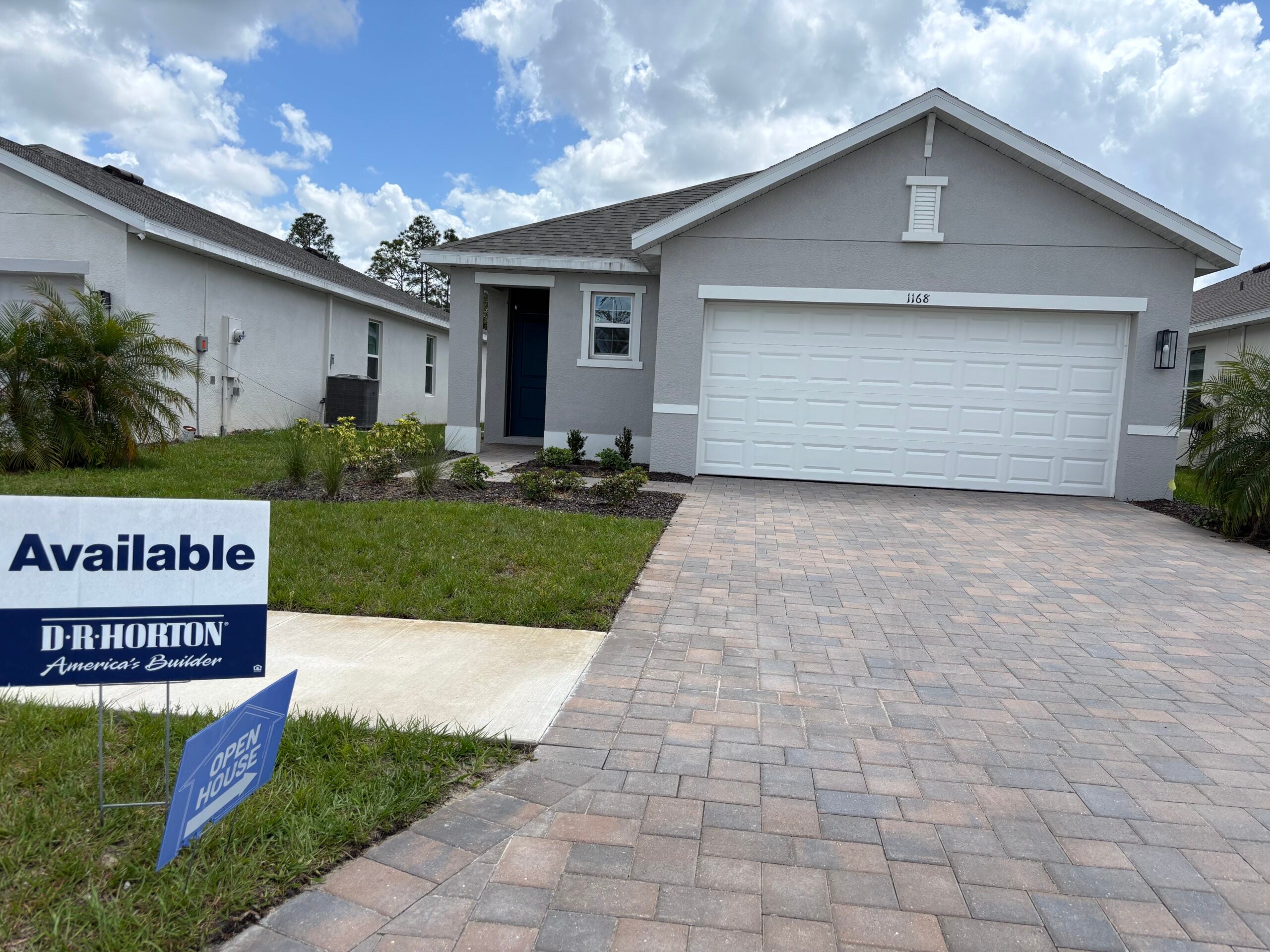
New construction, while usually more expensive than existing homes, saw deep price cuts in 2025. Nearly 1 in 5 new homes sold at a discount in Q4 of 2025, according to a recent report from Realtor.com. On top of that, new construction can offer something existing homes can’t: mortgage rate discounts. Many homebuilding companies either own or partner with mortgage companies that can offer often steep rate discounts in the form of mortgage points and temporary buydowns.
For example, as of writing, Starlight Homes is offering an adjustable-rate mortgage (ARM) with a rate of 3.25% for the first five years. After that, the rate adjusts annually, with a maximum increase of 1% every year, capped at a maximum of 8.25% for the loan’s lifetime. Similar ARM rates are currently at 5.42%.
Therefore, builders affiliated with lenders are able to lure in buyers with a brand-new, move-in-ready home by covering lending costs. This brings the monthly payment within the range of similar, older existing homes. How are existing home sellers supposed to compete?
“We’re also seeing tons of closing costs as well as move-in packages being an included item in new home construction sales,” says Kelley King, a real estate agent in Charlotte, North Carolina. These packages can include things like appliance upgrades and premium finishes.
Not all new homes are created equal
But buying a new home isn’t all roses for buyers. In many cases, because of the speed these homes were built and the environment they were built in, new homes can have issues that old homes don’t. A home inspection on a newly built home is just as important, if not moreso, than an inspection on an existing home.
“The main problem with new homes is that they’ve never been test driven,” says Nick Gromicko, founder of the International Association of Certified Home Inspectors (InterNACHI). “No one has ever lived in them. So the inspector has to be careful not to overlook the over-obvious things such as the furnace simply not turning on or the bathtub drain not being hooked up.”
If you’re buying new, you’ll want to understand if your home comes with a warranty, along with knowing what that warranty covers and for how long. Your builder may be on the hook for the repairs, but the timeframe could be limited.
It’s important to note that builders have a fiduciary duty to the stockholders of their company that keeps them from going above and beyond building code.
Builders like to say that the homes they build are ‘up to code’ when really, they are ‘down to code. Code is the bare minimum. If the builder made the homes any worse, it would be outright illegal.
— Nick Gromicko
Founder, International Association of Certified Home Inspectors (InterNACHI)
On top of that, many states in the Sun Belt, including Arizona, Colorado, Nevada and Texas, don’t have a statewide building code. That means acceptable building minimums are different from city-to-city or county-to-county.
Different states, different stakes
In the recent past, some buyers were waiving home inspections to make their offers competitive. Now, in some areas, those inspections are being used as leverage. What sort of leverage a buyer has depends not only on the market, but on the way the state handles real estate transactions.
For instance, in North Carolina, on top of depositing earnest money, there’s a non-refundable due diligence fee the buyer pays, which can be several thousand dollars. If a buyer backs out of the sale, they’ll often get the earnest money back, but not the due diligence money.
But people still back out of sales, which can present an opportunity for other buyers to come in and put in a lower offer.
“I actually had a client who just closed on her first house. We were able to put an offer on it and save her money, because the person who had previously been under her contract on the house, canceled it after the inspection,” says King.
Georgia handles things much differently according to Bettina Brown, real estate lawyer for Weissman Law in Atlanta. “We have a very strong due diligence period for Georgia. So it affords the buyer a lot of protections and not forcing them to buy a house they do not want,” says Brown. “We’ve had buyers change their mind because there’s a hairball in the bathtub.”
Most states, like Georgia, don’t require due diligence fees, which means that buyers may be more apt to walk away if the negotiations at appraisal or inspection don’t go their way. Sellers need to be prepared for this possibility just as buyers in hotter markets have to be prepared for a potential bidding war.
According to McManus, sellers can take steps to avoid this tension in negotiating at inspection time. “When I take on a listing, I have all my sellers do an inspection prior to going live,” says McManus. “So we have an inspection report, and that gives my sellers an opportunity. If there are things that come up that could be an issue, we repair it ahead of time.”
That sort of preparedness can deflate tension for both parties, says McManus.
The shadow mortgage affordability squeeze hitting Sun Belt States
Along with the market shift happening in many popular Sun Belt metros, Florida and Texas, in particular, are especially experiencing a change due to rising costs and the fallout of the pandemic boom. In the first part of the decade, both states saw a significant rise in population as many working professionals relocated to metros like Miami and Austin from higher-cost areas.
But now, with their home prices elevated, other homeowner costs are rising too: namely, taxes and insurance. Texas ranks seventh highest for property taxes according to the Tax Foundation and it ranks above average for homeowners insurance premiums. Florida ranks number three for homeowners insurance, and on top of its expensive insurance, many homeowners are paying high HOA fees. Coupled with high home prices, these costs are putting demand in a vise in these states.
The national home price division
While all of this advice is regional, there are some national trends at play here. In the low-rate period of 2020-2022, there was a near-universal surge in housing demand across the United States. Homes spent limited time on the market and often closed above asking price. In general, sellers needed to do little to make their homes competitive among eager buyers. The Sun Belt saw particular growth during this time. This migration, coupled with available land and more friendly state regulations led to aggressive building in states like Arizona, Florida and Texas.
Now, as mortgage rates have come up and held, the picture has warped. Nationally, home prices in 2025 saw the smallest increase since 2011 according to the S&P Cotality Case-Shiller Index. But this national picture belies a regional split. The Northeast and Midwest still saw steady home price growth in 2025, buoyed by cities like Chicago (+5.3%) and New York (+5.1%). On the opposite end, cities like Tampa (-2.9%) and Denver (-2.1%) swung into the red because of factors like excess housing supply and rising overall unaffordability.
While price declines in the Sun Belt can look like an extreme swing, many of the markets that saw a boom period during the pandemic are simply correcting. For instance, Miami saw a 1.5% decline in home prices last year, but over the past three years it works out to a 3.1% average annual increase. In other words, the dip in prices last year only offset the increases seen previously.
While that sounds like a small correction on paper, for sellers in these areas, that can be hard to stomach. Many people are trying to sell at what they thought their house was worth, and when they hear that their home is overpriced, it can feel like they missed the boat.
That’s because many Sun Belt cities saw significant discounts in 2025. At the top of the list, West Palm Beach, FL had a 10.9% average discount for homes that sold below listing price, according to an analysis of MLS data from Redfin.
Further north, in Charlotte, there are also good deals to be had, says King. “I had a client who we got 30 grand off of the asking price, in addition to $10,000 toward seller concessions.”
So, while the market recalibrating can be a pain point for sellers, buyers are in a better position to afford a home.
Some things don’t change
Although the market is shifting, some things in real estate will always be true.
“It’s the same old story. It’s ‘price the property right,’” says Rill.
Unfortunately, real estate website algorithms can warp can inflate sellers’ expectations of what their home can sell for. It can also turn away buyers who might not look at the house due to the list price, even if they could get it with some negotiating. According to McManus, this is where it’s a real estate agent’s duty to pull records of comparable nearby home sales and level with sellers on the price they can realistically get.
“If you’re not listening to your agent about the pricing and you’re in some la-la land about it — no, your house isn’t going to sell. And the longer your house takes to sell, people will think something’s wrong with it,” says Brown.
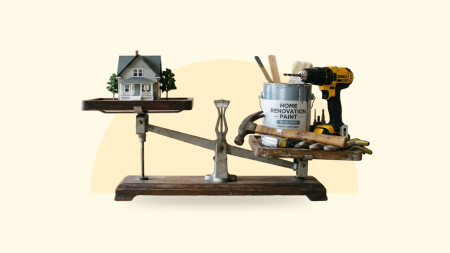
That’s a far cry from a few years ago when all a seller had to do was list their home to start a bidding war. Now, to get their home to sell, sellers must do more than list it and rake in multiple offers. We’re talking open houses, fresh paint, staging and updating: in some ways that’s a return to the old norm of selling a home. It’s a telling sign that the homebuying frenzy of 2020 through 2023 is over. It’s 2026 and these are the real estate stakes in the Sun Belt.
Why we ask for feedback
Your feedback helps us improve our content and services. It takes less than a minute to
complete.
Your responses are anonymous and will only be used for improving our website.
Help us improve our content
Thank you for your
feedback!
Your input helps us improve our
content and services.
Read the full article here